
Orange County Supervision Types
A released person is not automatically on parole or probation. North Carolina uses several forms of community oversight, and each starts from a different legal event. Probation is a sentence ordered by a judge and served in the community, sometimes after a short active term. Parole is a conditional release route that chiefly applies to eligible older-law sentences. Post-release supervision follows imprisonment for covered modern sentences. It is an actual release from prison, but the person has not yet reached full discharge from correctional control.
Orange County pretrial supervision is separate again. Orange County Pretrial Services may supervise a person whom a court releases while charges remain pending. That person has not been sentenced to probation merely because reporting rules apply. Likewise, work release at Orange Correctional Center lets an incarcerated person leave for an approved assignment and return. It is not release from the state prison term.
| Status | Who orders or controls it | What it means |
|---|---|---|
| Probation | Criminal court and NCDAC Community Supervision | A court sentence served in the community under stated terms. |
| Parole | Post-Release Supervision and Parole Commission | Conditional release under the law that governs an eligible older sentence. |
| Post-release supervision | Commission authority with NCDAC field supervision | A required supervision phase after release from a covered prison sentence. |
| Pretrial supervision | Orange County court and Pretrial Services | Community release while the criminal case is still pending. |
- Discharge
- The formal end of a sentence or supervision term.
- Condition
- A rule the person must follow while supervised.
- Absconder
- A correctional status alleging that a supervised person failed to remain in contact or at known whereabouts.
- Detainer
- A request or hold from another authority that may affect custody or release.
Verify Orange County Post-Release Supervision
The detailed NCDAC Offender Public Information search is the best starting point for state correctional supervision. It can separate an inmate status from a probation, parole, or post-release status. Search with a seven-digit offender number when known. A name search can also use first and last name, middle initial, sounds-like matching, sex, race, ethnicity, birth date, or age range. Do not limit a released-person search to Active Inmate. The Active Probationer-Parolee, Inactive, and All options may be more useful.
Open the full record. A result row is only a lead. Compare the person’s date of birth and conviction facts, then read the status and history sections. A dated actual release or last movement can show the end of prison custody. The separate supervision field can show that community control continues. A projected date does not prove release, and an inactive component does not prove that every case or hold has ended.
- Identify whether the last known custody was Orange County Detention Center or an NCDAC prison. County jail history and state prison history are not the same record.
- Search NCDAC OPI with the offender number or the narrowest reliable name and birth information. Include non-inmate status choices.
- Open the detailed record and note the exact inmate status, supervision status, actual release date, last movement, and supervision dates shown.
- Check the Orange County court case when probation may come from a judgment. The court record, not the sheriff, identifies probation imposed in that case.
- Use the live NCDAC office directory or the Orange County contact line to confirm the reporting office and current instructions.
The Orange County released-inmate lookup covers the jail record, court case, and receiving-custody checks when the type of release is still unclear.
NCDAC’s Community Supervision page shows the agency responsible for field supervision.
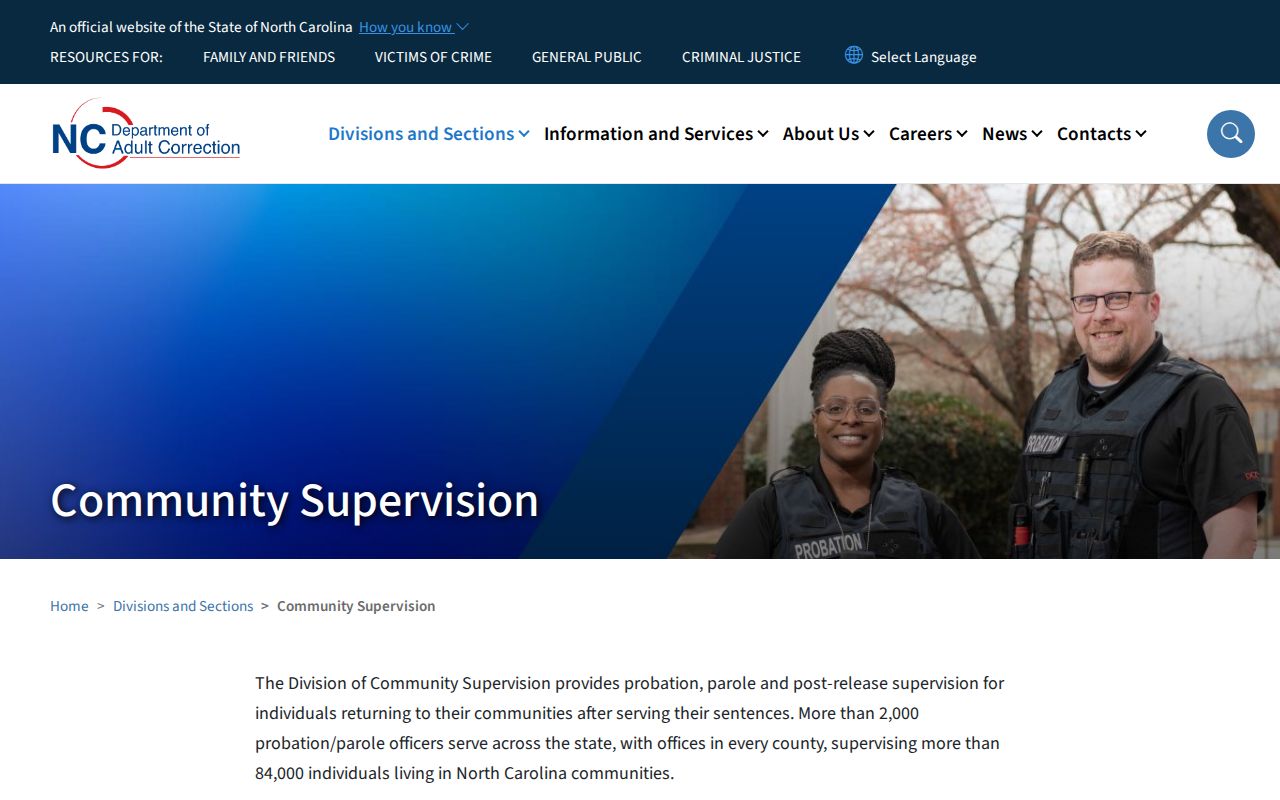
The state page confirms the division’s role, while a person’s detailed OPI record supplies the status that connects an individual to that role.
Orange County District 14 Supervision
Orange County is grouped with Chatham and Durham counties in NCDAC Community Supervision Judicial District 14. The observed directory listed district administration at 3325 Chapel Hill Boulevard, Suite 230-A, Durham, with 919-560-5423. That directory carried a July 2024 date, so it should not be treated as a permanent reporting location. Check the live listing before traveling or sending mail. An individual may have instructions for a different office.
The Orange County community resource guide reports a local probation and parole contact at 919-245-2220. Use that number to confirm routing, not to infer that every person reports at one site. NCDAC controls state field assignments. The county jail and sheriff do not decide parole eligibility or change state supervision terms.
The live NCDAC district and office directory is the source to check for current District 14 information.
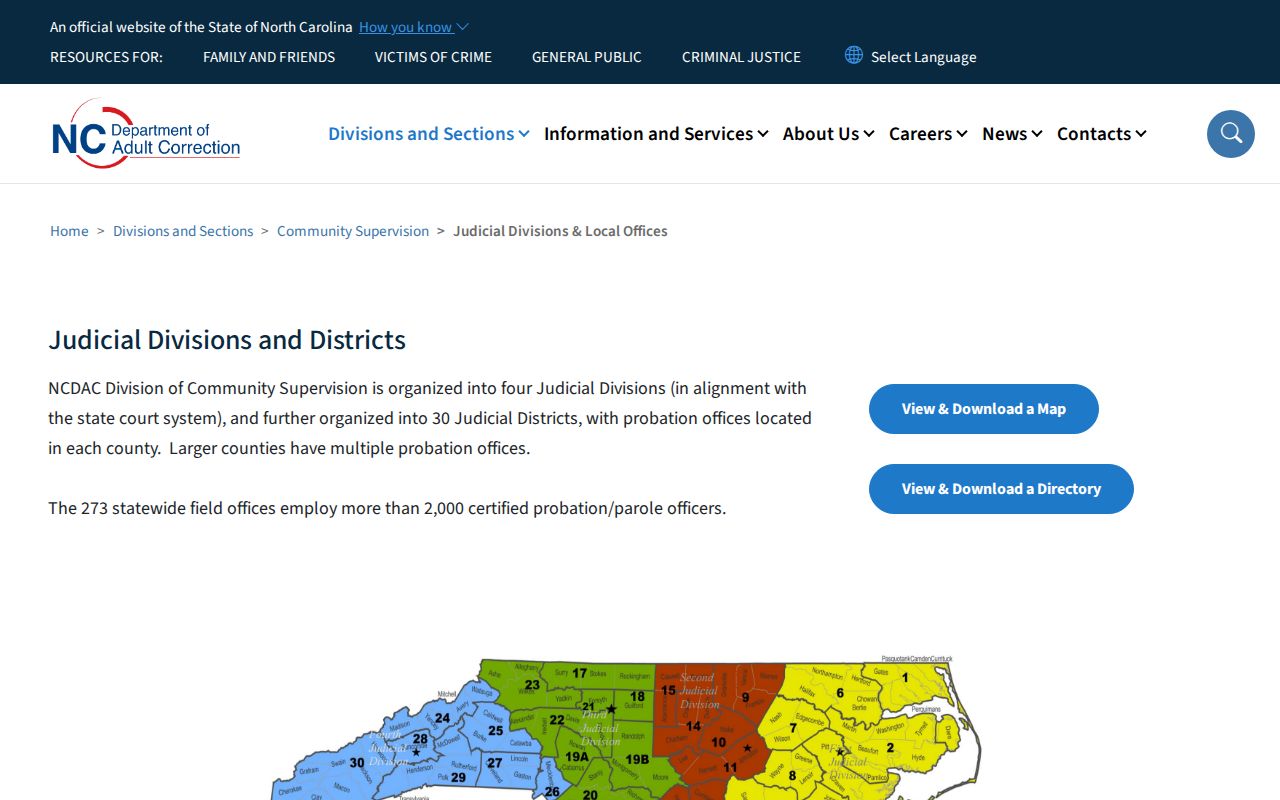
The directory image documents Orange County’s district grouping, but current office details should still be verified on the live page.
Community Supervision District 14
3325 Chapel Hill Boulevard, Suite 230-A
Durham, NC
919-560-5423
Directory observation dated July 15, 2024. Verify before travel.
Orange County Contact
919-245-2220
Confirm the assigned office and reporting instructions with NCDAC.
Note: A public office listing does not replace the reporting instructions issued to the supervised person.
Orange County Absconder Search
NCDAC maintains a separate Absconder Search. It accepts a last name or a county of supervision, including Orange. This tool is narrower than the main offender search. It is meant to surface a formal supervision status, not to answer every question about release or current custody.
An absconder label alleges failure to stay in required contact or at known whereabouts. It is not proof of a new conviction. It also does not prove that the person is currently held in the Orange County Detention Center. Open the linked offender record and compare identifiers. Then contact Community Supervision for current confirmation. If a warrant or arrest is at issue, rely on the responsible court or law-enforcement record rather than interpreting the label on its own.
The official Orange-filtered absconder search route is shown in the captured state screen.
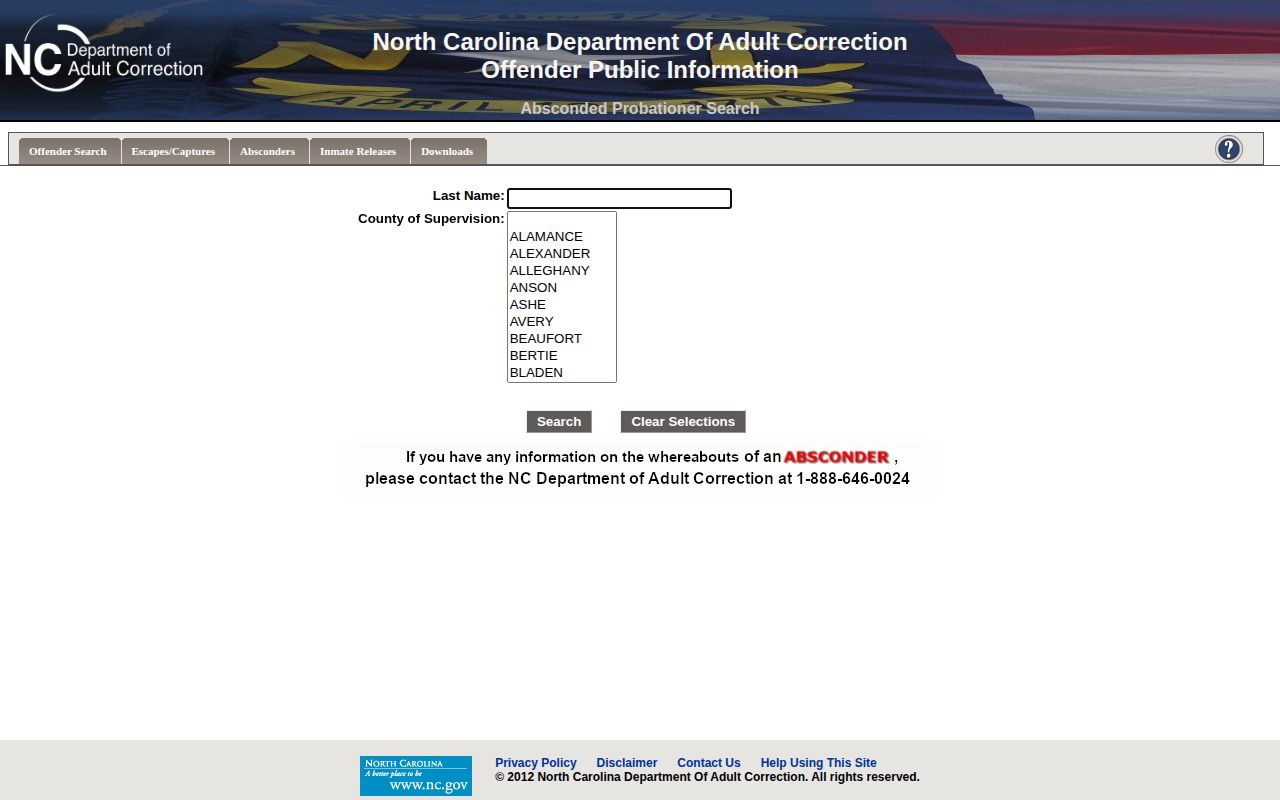
The search can identify an official state supervision entry, but the full record and supervising office provide the needed context.
Orange County Parole Decisions
The North Carolina Post-Release Supervision and Parole Commission makes parole decisions for cases within its authority and has statutory duties involving post-release supervision. Community Supervision performs field work. These functions should not be blended. The Commission decides within its jurisdiction, while the assigned officer and field office manage reporting and compliance.
North Carolina does not hold formal parole hearings, and Commission members do not personally meet an offender during possible-parole review. There is no conventional advance hearing calendar to search. Instead, the Commission publishes retrospective monthly discretionary-parole review spreadsheets beginning with September 2024. Observed columns include OPUS number, name, birth date, parole type, decision, denial reasons, primary offense, time served, and sentence imposed. Observed decisions include approve, deny, and incomplete. The Commission also defines suspended decisions.
Eligibility is not approval. G.S. 15A-1371 contains formulas and special categories for covered older-law cases. The Commission explains that crimes before October 1, 1994 may be eligible, while Structured Sentencing removed ordinary parole for later felonies with limited distinct exceptions. Case files remain confidential, and the monthly sheets are not a full-file portal.
The official monthly review page is the correct substitute for a hearing calendar.
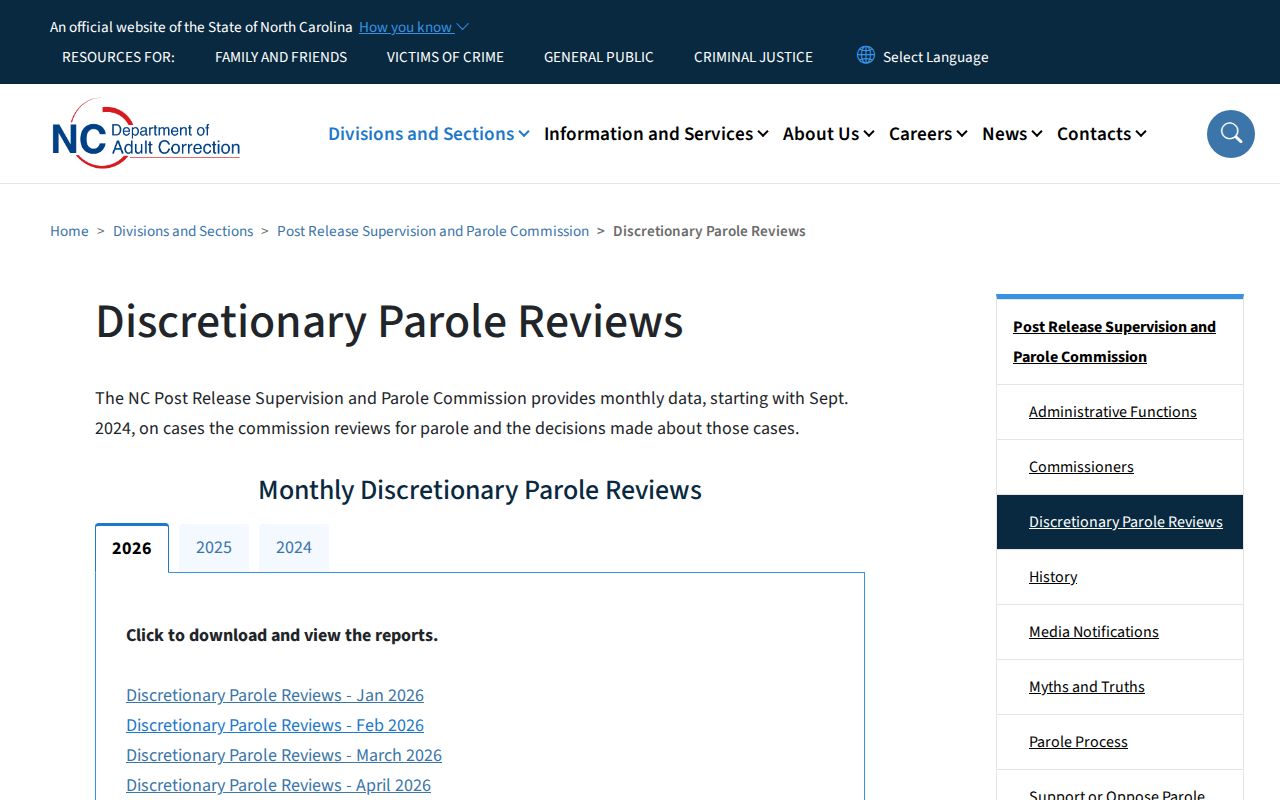
The spreadsheets report completed review outcomes after the fact; they do not promise a release date or disclose the confidential Commission file.
Orange County Supervision Discharge
Supervision ends through an official discharge or termination, not merely because a person stops appearing in one search filter. For probation, the judgment and later court orders define the term, while NCDAC records may show field status. For parole or post-release supervision, the detailed correctional history and Commission authority govern. Completion of a covered post-release supervision term terminates the sentence under the applicable statutory framework, but the exact record labels must be read in context.
Conditions can include reporting, approved residence, travel limits, treatment, fees, or other case-specific rules. A violation may lead to added controls, court or Commission action, or custody, depending on the supervision type and governing law. Public records do not replace the actual written conditions. When records conflict, note the dates and agency names, then ask the court or NCDAC office that controls the status.
North Carolina VINE may provide custody-event notices, but it is not a general supervision tracker. The state sex-offender registry is also separate and applies only when registration law covers the person. Neither source should be used to infer ordinary probation, parole, or discharge when its own record does not say so.
Note: Release from prison to supervision is a real custody change, but full discharge comes only when correctional control formally ends.
Lantern Project After Orange County Release
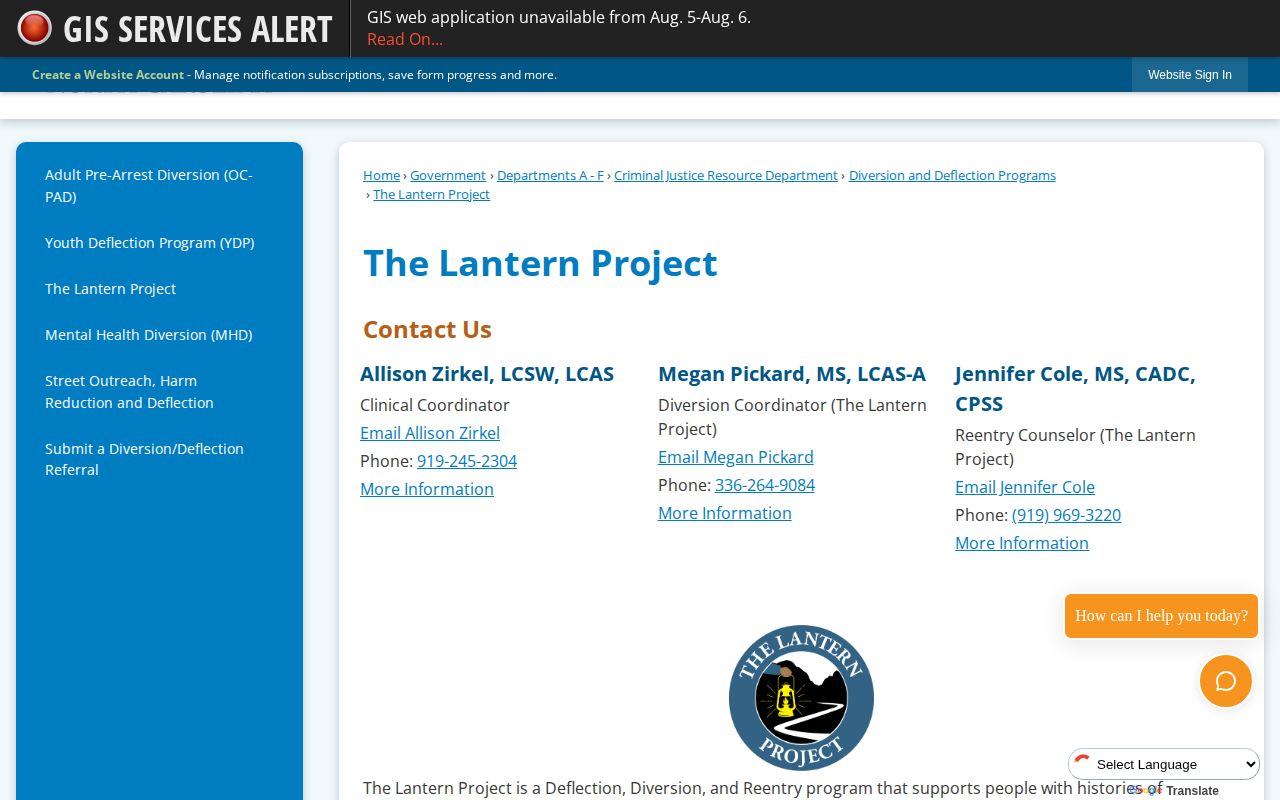
Orange County provides a distinctive reentry path through the Lantern Project. Its reentry counselor accepts referrals for people who are still detained at the Orange County Detention Center or who were released from that jail within the previous month. That short window matters. A prompt referral can support a transition plan while the person is still close to the point of release.
The program can connect participants with peer support and behavioral-health services. It is a county reentry resource, not a state parole office, and it does not determine supervision status. A person may use Lantern support whether the release led to probation, pretrial supervision, another form of oversight, or no correctional supervision. Formal reporting questions still belong with the court, Pretrial Services, or NCDAC.
The official Orange County Lantern Project page documents the referral window and transition-planning role.
The county program adds practical reentry support after jail release without replacing any order from Community Supervision or the court.