
Orange County Mugshot Records
A booking photograph is made at intake and belongs to that booking episode. Its meaning is limited. The image does not show whether the charge was later dismissed, whether the person was convicted, or whether the person remains confined. After an Orange County release, the photo may remain in the agency file even though the name disappears from the current detainee report.
North Carolina law requires field-specific analysis. G.S. 132-1.4 makes specified arrest and incident information public while treating criminal investigative material differently. G.S. 15A-502 authorizes or requires photography in stated arrest, commitment, and conviction situations, but it does not create a blanket right to every photo online. The sheriff must assess the actual record and any exemption.
The official criminal-record access statute shows why the public status of one field cannot be extended to every part of a booking file.
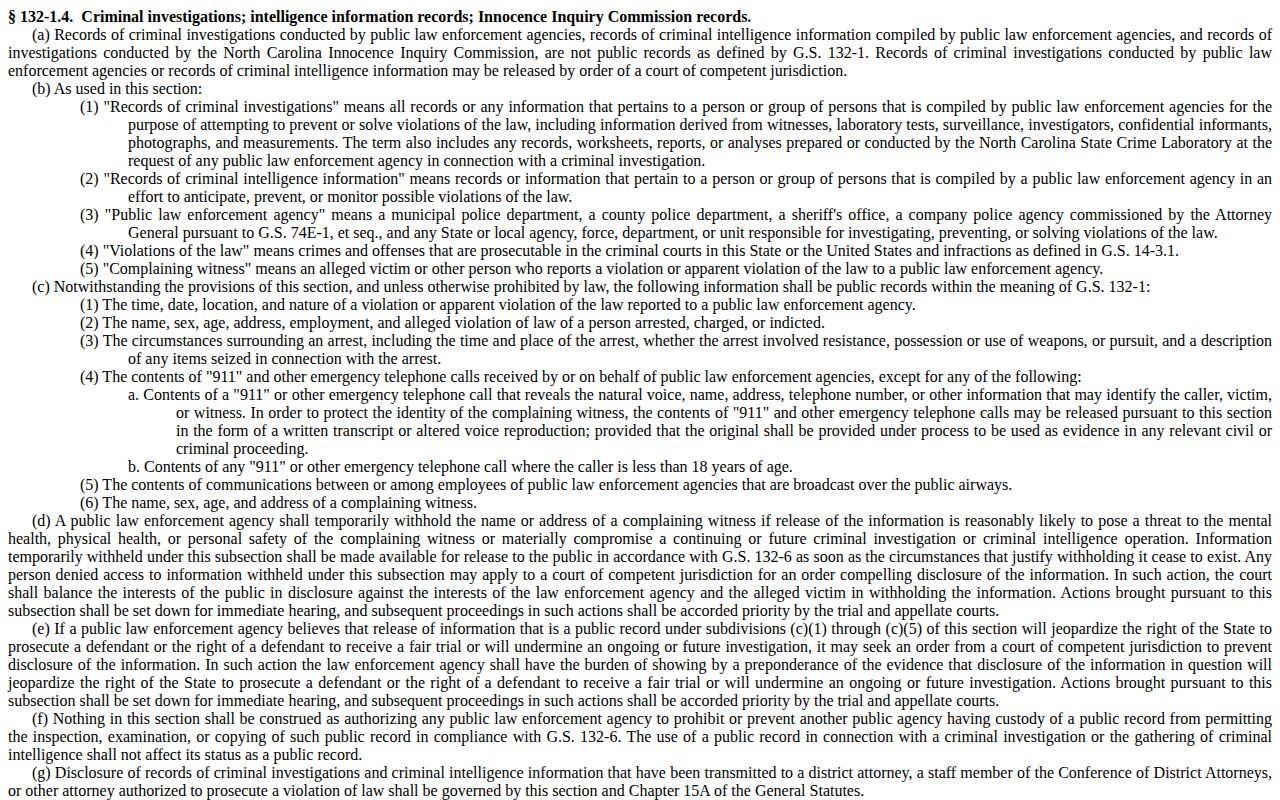
The statutory source supports a focused request and a field-by-field response. It does not support a claim that Orange County must keep every booking photograph on a public website.
Find Orange County Released Mugshots
No official Orange County archive of released-person photographs was verified. Each available channel has a different scope. The sheriff's New Booking Photos page concerns intake, not release. A county record request is the best official fallback for a past jail episode. NCDAC may hold a correctional image for a state offender, but it is not the county booking photo.
| Channel | Photo status | How to use it |
|---|---|---|
| OCSO Current Detainees | No photo in the observed report | Use only for present-custody fields and check the report timestamp. |
| OCSO New Booking Photos | Intake images | Match a recent image to the booking episode; it is not release proof. |
| County records portal | Requestable, subject to law | Ask for the image tied to one booking number and date range. |
| NCDAC record | May hold a state offender image | Use for a person who entered state correctional custody. |
| VINELink | Record-dependent | Use for status and alerts, not as a guaranteed photo archive. |
| News or official releases | Selective | Preserve the caption and date; do not treat selection as a full archive. |
Commercial aggregation can mix counties, preserve stale data, and separate a photo from the outcome. Official records should replace any commercial lead before a conclusion is drawn. Paid publication or removal services do not establish identity, disposition, current custody, or release.
Orange County State Offender Photos
An NCDAC image belongs to the state correctional record. It may help identify someone who entered a North Carolina prison after an Orange County case, including a person transferred from the county jail to Orange Correctional Center. It should never be labeled as the Orange County Detention Center booking photo unless the source record says that it is the same image.
Start with the NCDAC Offender Public Information search. Use the seven-digit offender number when known, or compare name and demographic fields carefully. The full record can separate inmate status from probation, parole, or post-release status and can display incarceration history, movement, sentence data, an actual release date, a projected release date, and detainers. A projected date is not proof that the state release happened.
NCDAC also offers a monthly Inmate Releases search. Orange is county code 68, but the county filter does not turn the result into an Orange County Sheriff product. The observed rows describe state releases and include offender number, name, release date, primary offense, and release type. For an older state release, general OPI with All or Inactive selected may preserve more history. Match any displayed photo to the offender number and the exact state record before using it as an identity lead.
Orange County Sheriff Photo Channels
The official Current Detainees page links a Daily In Custody Report by Facility. Fields observed there include name, booking number, attorney, charge, agency, judicial status, docket, bond, court date, booked time, days in custody, facility, and confinement reason. The observed report had no release date, release type, or photograph. Its printed generation date was older than the access date, so readers must check the timestamp.
The sheriff also provides an official New Booking Photos page. That channel may identify a recent intake image, but it does not establish that the person was released.
The image source is tied to new intake. Pair its booking details with the jail release transaction and court result before describing what happened after custody.
Orange County Sheriff Mugshot App
Orange County Sheriff NC is the official mobile app named in the local source sweep. The App Store listing says users can interface with the detention center and receive office news. That description makes the app a valid local access channel. It does not document a mugshot gallery, a recent-release tab, a photo-retention period, or a fixed update schedule.
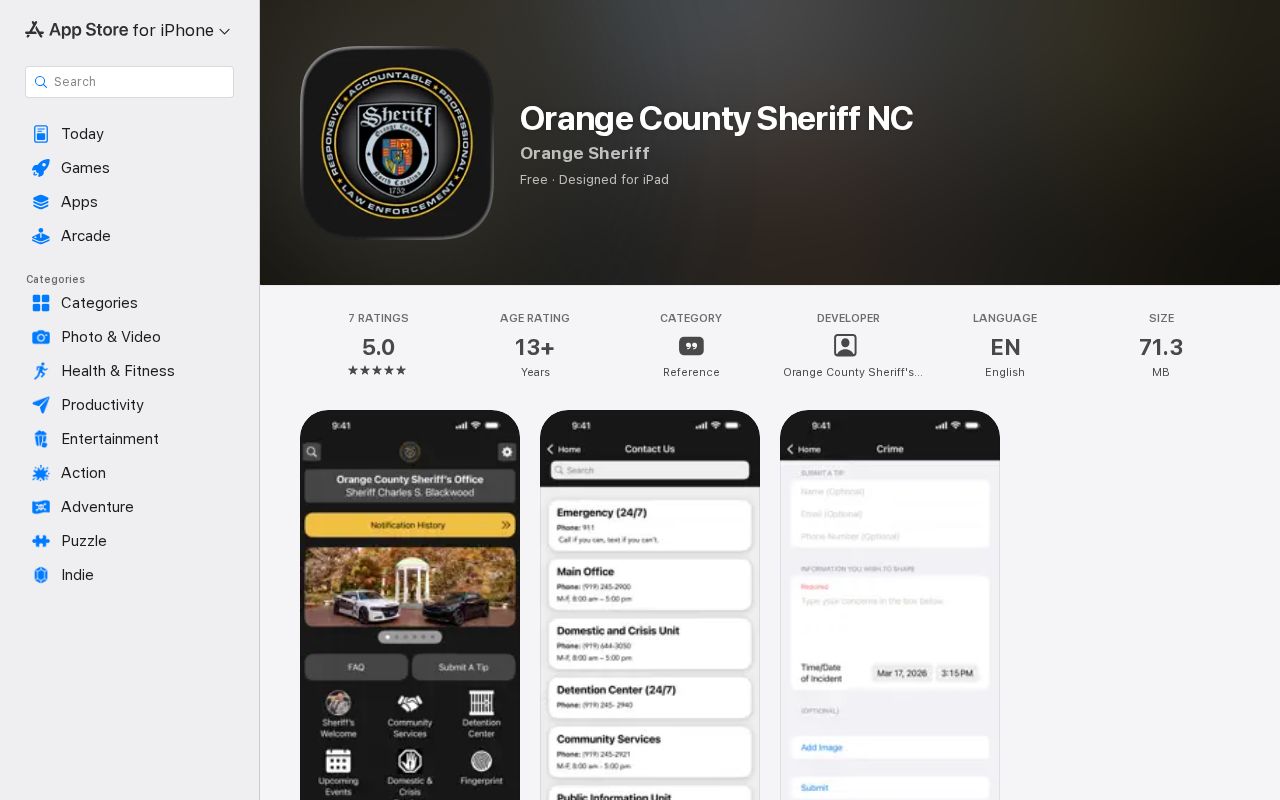
The listing confirms the official developer and detention connection, not a photo feature. Check the live app menu and label each result according to what it actually displays. An app-only current-custody photo would still not prove a later release, and a missing image would not prove removal from the agency record.
Request Orange County Booking Photos
The Orange County records portal is the verified official fallback. A focused request reduces the risk of matching the wrong person or episode. The request should seek the photo with the booking sheet and release transaction, not an image alone.
- Provide the full name, date of birth if known, booking number, and a tight booking-date range.
- Ask for the booking photograph associated with that exact episode.
- Also request booking date and time, release date and time, release code or reason, and destination if transferred.
- State that electronic copies are preferred and ask for all separable public portions.
- If material is withheld, request the specific legal basis and keep the portal response.
North Carolina requires access as promptly as possible but sets no universal response period for every request. Orange County's policy intends small routine requests to be free. Requests above 100 pages may incur actual production cost, with listed per-page rates. A single electronic photo and booking episode is much narrower than a broad photo archive request.
G.S. 132-6.2 permits a requester to choose a medium the agency can provide. An ordinary uncertified-copy charge cannot exceed actual reproduction cost, while extensive information-technology, clerical, or supervisory work can support a reasonable special-service charge based on actual cost. Orange County lists electronic black-and-white and color pages at two cents each under its current policy, though a record’s format and review needs can differ. Ask for an estimate before authorizing unusual production work.
The full booking and release field inventory appears on the Orange County released inmates search page. Note: An arresting police department may not be the custodian of the detention-center image.
Orange County Photo Context
A photo must be read with the court case. The North Carolina eCourts Portal and Orange County Clerk can supply the disposition, judgment, sentence, bond changes, probation, and later orders. A dismissal does not tell the exact time the jail released a person. The sheriff transaction supplies the movement, while the clerk record supplies the legal outcome.
Official press releases and local reporting sometimes reproduce a law-enforcement image for a newsworthy event. That is selective publication, not an Orange County release archive. Preserve the caption, date, named agency, and update history. A later correction, dismissal, or expunction can make an older story incomplete.
Search-engine results can also confuse Orange County, North Carolina with counties in California or Florida. Confirm the agency domain and state before associating any image with an Orange County booking. Commercial pages are not proof of the booking, identity, outcome, or current status.
Orange County Mugshot Retention
Online visibility and agency retention are not the same. The North Carolina County Sheriff’s Office records schedule defines inmate-incarceration records to include entry and release summaries, arrest sheets, commitment and release orders, work-release records, and pretrial-release agreements. It authorizes destruction three years after release or transfer, subject to audit, litigation, or other valid holds. That period is an authorization for agency record handling, not a promise that a booking photograph will remain visible on the sheriff’s website.
Weekly inmate lists may be destroyed when replaced or obsolete. A booking sheet, release transaction, and related image can follow a different records path. When a photo is no longer online, identify the person, booking number, and episode in a request instead of assuming the agency destroyed it. If the sheriff says the record no longer exists or is withheld, keep the written response and any cited schedule or statute.
Note: A photo disappearing from an intake page does not establish expunction, record destruction, or release from the Orange County Detention Center.
Orange County Mugshot Expunction
North Carolina expunction law appears chiefly in Chapter 15A, Article 5. The Judicial Branch expunction overview explains the process, while the statute controls eligibility. Current G.S. 15A-146 provides an automatic route only when all statutory conditions are met, including qualifying dispositions. It also permits an arresting agency to retain related investigative records in stated circumstances.
Expunction changes public access to qualifying court and related records. It should not be described as physical destruction of every government trace, and it does not ensure that every copy made earlier vanishes at once. Send the official order or case information to the custodian and ask what action its policy permits. If a news outlet used the image, address its own correction or removal policy without using a paid mugshot-removal intermediary.
The North Carolina Judicial Branch expunction overview is the official starting point for the court process.
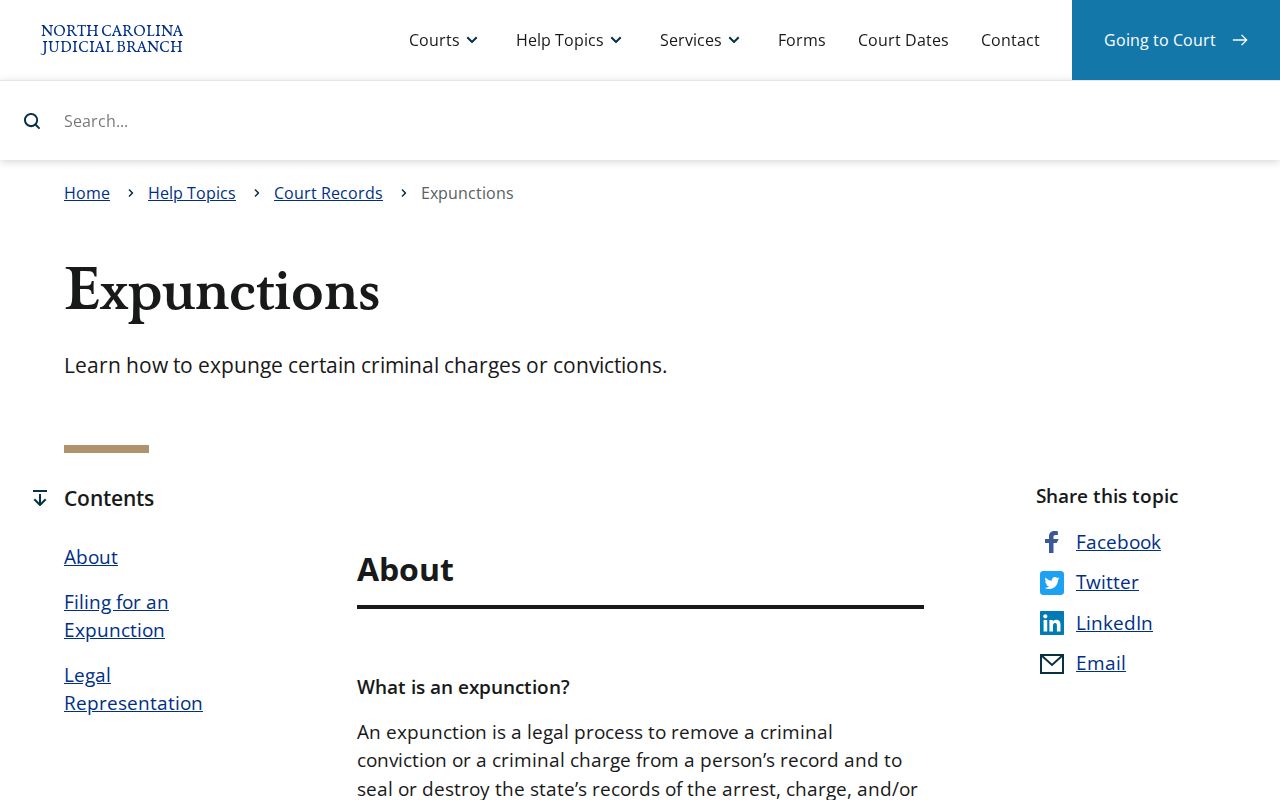
The overview supplies process context, while the current statute and order control a specific case. Bills proposed in prior legislative sessions do not establish a current statewide booking-photo removal deadline.
Verify Orange County Mugshot Identity
A common name can connect the wrong photo to the wrong case. Use the booking number first. Then compare date of birth, booking date, arresting agency, charge, case number, and facility. Do not rely on a filename or search snippet. If the official record does not disclose enough identifiers, ask the custodian to confirm whether the image belongs to the stated booking episode.
Next, separate the four facts people often merge: the image proves intake photography; the booking record proves a jail episode; the release record proves the end or transfer of that episode; and the court disposition explains the legal result. A current-custody roster proves none of the last three once the person is gone.
- Booking photo
- The intake image for one arrest or commitment episode.
- Release record
- The jail transaction showing when and why custody ended or transferred.
- Disposition
- The court's outcome for each charge.
- Expunction
- A legal change to public access for a qualifying matter.